Prep 10 minCooking 15 min2 servingsapprox. 360 kcal per serving (estimate)Checked by Merve Nur Karaca
Your rating:
Why good for your mouth? Fish provides the omega-3 fatty acids DHA and EPA. A higher DHA intake was linked to about a 22% lower chance of periodontitis in a large study. Preferably choose oily fish such as salmon or mackerel, which contain the most omega-3. In a meta-analysis, omega-3 only gave slightly better healing as an addition to gum treatment. This dish fits an eating pattern with plenty of vegetables and little sugar, which reduced bleeding gums in research. ([1] Naqvi 2010; [2] Van Ravensteijn 2022; [3] Woelber 2016)
Ingredients
2 fish fillets (salmon, mackerel or sea bass)
1 courgette
1 red pepper
150 g green beans
1 tbsp olive oil
Fresh thyme or parsley
Salt and pepper
Method
Prepare the vegetables. Cut the courgette and pepper into strips and boil the green beans for 5 minutes.
Grill the vegetables. Grill the courgette and pepper for 6 minutes in a grill pan with half of the olive oil.
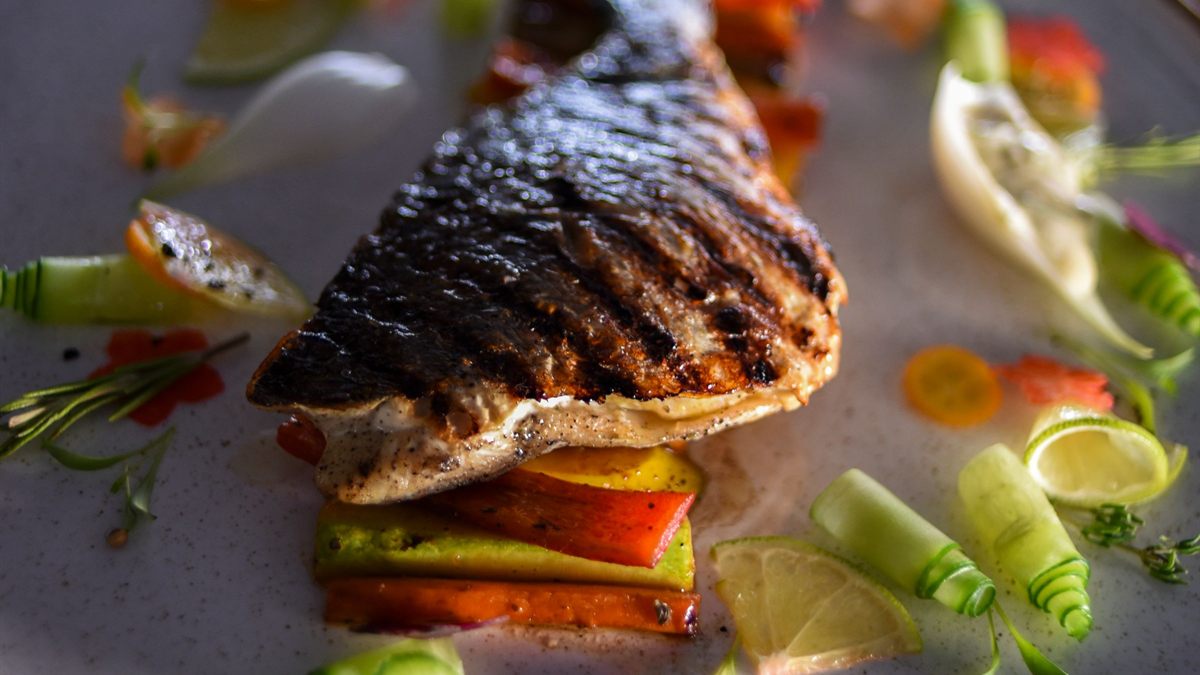
Grill the fish. Brush the fish with the rest of the oil, season and grill for 3 to 4 minutes per side.
Serve. Serve the fish with the vegetables and fresh herbs.
Made this recipe? What did you think?
No single dish cures gum inflammation. It is about your eating pattern as a whole, alongside good brushing, interdental cleaning and your check-ups.
Sources
[1] Naqvi AZ et al. n-3 fatty acids and periodontitis in US adults. J Am Diet Assoc 2010;110:1669-1675. pubmed.ncbi.nlm.nih.gov/21034880/
[2] Van Ravensteijn MM et al. The effect of omega-3 fatty acids on active periodontal therapy: a systematic review and meta-analysis. J Clin Periodontol 2022;49:1024-1037. pubmed.ncbi.nlm.nih.gov/35713248/
[3] Woelber JP et al. An oral health optimized diet can reduce gingival and periodontal inflammation in humans, a randomized controlled pilot study. BMC Oral Health 2016;17:28. pubmed.ncbi.nlm.nih.gov/27460471/